
History of Faro Cathedral

From the Origins to the Medieval Construction
Faro Cathedral, also known as the Church of Saint Mary (Igreja de Santa Maria), was built following the Christian reconquest of Faro from the Moors in 1249, during the reign of King Afonso III. The temple was erected upon the remains of a Paleo-Christian basilica which, during the Moorish period, had been converted into a mosque.
In the Moorish era, to the ancient Roman name of Ossónoba was added, after the 9th century, the reference to Santa Maria do Ocidente (Saint Mary of the West) by Ibn Harun and, later, Faaron. In 1251, two years after the reconquest, the Archbishop of Braga, Dom João Viegas, began construction of the church, dedicated to Our Lady. In 1271, the temple was entrusted to the Order of Saint James as a reward for their services in the taking of the settlement.
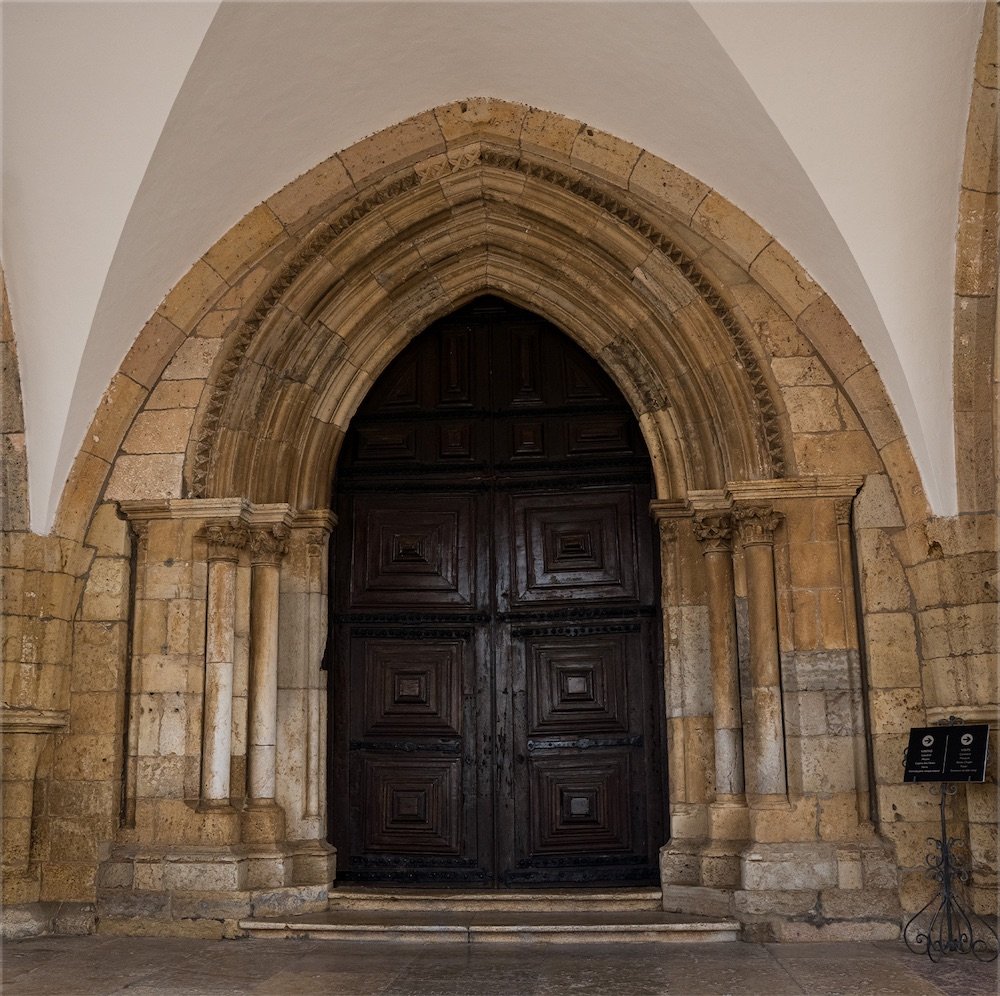
Under the reign of King Dinis, from 1321 onwards, the church underwent a new phase of works, being enlarged and redesigned. Some architectural elements from the original 13th and 14th-century building are still preserved, such as the bell tower and the two transept chapels. In the 15th century, the temple underwent further remodelling, of which medieval remains still exist, including the portico, the tower, the lateral transept chapels with ribbed vaults, and an interior side door.
Elevation to Cathedral
In 1577, during the episcopate of the humanist bishop Dom Jerónimo Osório, the church was elevated to Cathedral status, becoming the seat of the Diocese of the Algarve following the transfer of the bishopric from Silves to Faro.
The English Attack of 1596
However, in 1596, the city was invaded by English troops led by Robert Devereux, 2nd Earl of Essex, who sacked and set fire to the church, destroying much of its interior, including the altars and wooden ceilings.
Baroque Reconstruction
Following this attack, extensive reconstruction work began, introducing Doric columns that support the semi-circular arches separating the building’s three aisles. During the 17th and 18th centuries, the church was enriched with gilded woodcarvings and Baroque decorative elements, which today represent one of the most valuable ensembles of that period in the Algarve.
Earthquakes and Restorations
The earthquakes of 1722 and 1755 caused further damage to the building, necessitating successive restoration works that significantly altered its original design.
The Cathedral Today
Today, Faro Cathedral features a longitudinal plan with three aisles of four bays, separated by Doric columns, a tripartite rectangular chancel, and a main chapel with a coffered ceiling. The main entrance is through a quadrangular galilee (porch) preceding the pointed arch portal situated beneath the bell tower. The north façade features a portal with a shaped pediment decorated with plasterwork and an ogival padded wooden door. The bell tower, which survived various periods of destruction, is now one of the city’s finest viewpoints.
The Cathedral is the seat of the Bishop of the Algarve, currently Dom Manuel Neto Quintas.
Timeline
Paleo-Christian Period Original Paleo-Christian basilica. The first Christians in Ossónoba.
Islamic Period (8th–13th Century) Conversion into a mosque. Santa Maria do Ocidente of Ibn Harun (Faaron).
1249 – Christian Reconquest King Afonso III conquers Faro.
1251 – Construction Begins Dom João Viegas, Archbishop of Braga. Church dedicated to Saint Mary.
1271 – Entrusted to the Order of Saint James Reward for services rendered during the reconquest.
1321 – Expansion Reign of King Dinis. New phase of construction works.
15th Century – Remodelling Portico and side chapels. Interior side door.
1577 – Elevation to Cathedral Dom Jerónimo Osório. Transfer of the episcopal see from Silves.
1596 – English Attack Robert Devereux, 2nd Earl of Essex. Destruction of altars and ceilings.
17th Century – Baroque Reconstruction Installation of Doric columns. Beginnings of the Baroque chapels.
18th Century – The Golden Age Enrichment with ornate altarpieces. Polychrome tiles (azulejos). Installation of historic organs.
1722 and 1755 – Earthquakes Structural damage. Extensive new restorations.
20th–21st Century – Preservation Classification as a National Monument. Modern restoration projects. Enhancement of tourism and heritage value.
Historical Figures
Dom João Viegas de Portocarreiro
Archbishop of Braga, who began the construction of the church in 1251.
Dom Jerónimo Osório (1564–1580)
A humanist bishop who elevated the church to Cathedral status in 1577. Known as the “Portuguese Cicero”, he was one of the greatest intellectuals of the Portuguese Renaissance.
Dom Francisco Barreto I (1636–1649)
Commissioned the construction of the Chapel of Our Lady of the Assumption (1640) and the Chapel of the Blessed Sacrament.
Dom António Pereira da Silva (1704–1715)
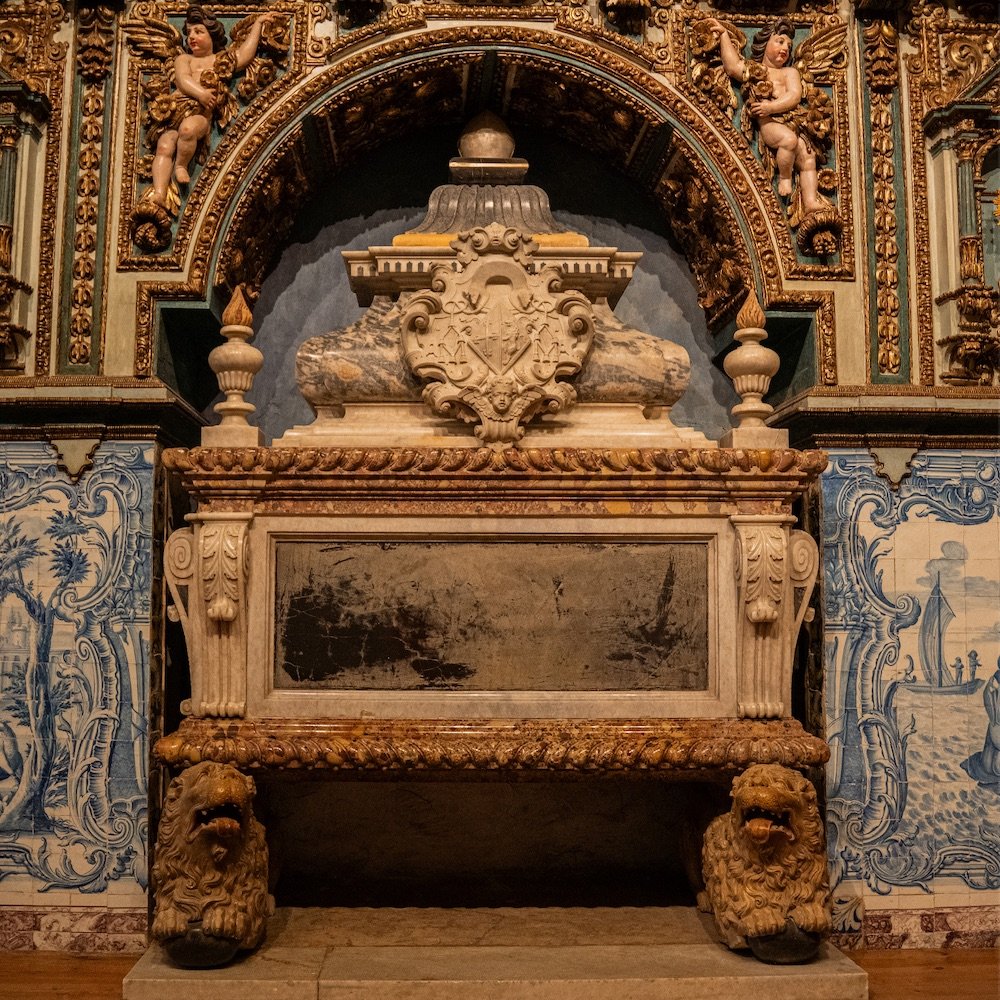
Commissioned the Chapel of Saint Vincent and the Relics, where his tomb is located.
Dom Simão da Gama (1685–1703)
Commissioned the Chapel of Our Lady of the Rosary and the Episcopal Pantheon.
Chronological Succession of the Bishops of the Diocese of the Algarve
Bishops of Ossónoba
Bishops of the Algarve – See at Silves
Bishops of the Algarve – See at Faro
Vicente (306, 314)
Itácio Claro (380)
Pedro (589)
Saturnino (653)
Exarno (666)
Belito (683)
Agrípio (688, 693)
D. Nicolau (1189-1191)
D. Frei Roberto (1253-1261)
D. Garcia (1261-1268)
D. Frei Bartolomeu (1268-1292)
D. Frei Domingos Soares (1292-1297)
D. João Soares Alão (1297-1310)
D. Afonso Anes (1312-1320)
D. Pedro (1322-1333)
D. Frei Álvaro Pais (1333-1352)
D. Vasco (1354-1367)
D. João (1367-1370)
D. Martinho de Zamora (1371-1379)
D. Pedro (1383)
D. Paio Gonçalves de Meira (1384)
D. João Afonso de Azambuja (1389-1390)
D. Martinho Gil (1391-1401)
D. João Afonso Aranha (1404-1407)
D. Martinho Gil (1407-1409)
D. Fernando da Guerra (1409-1414)
D. João Álvaro (1414-1418)
D. Garcia de Menezes (1418-1421)
D. Álvaro de Abreu (1421-1429)
D. Rodrigo (1429-1440)
D. Rodrigo Dias ou Rodrigo Diogo (1441-?)
D. Luís Pires (1450-1453)
D. Álvaro Afonso (1453-1467)
D. João de Melo (1467-1480)
D. Jorge da Costa (1481-1485)
D. João Camelo (1486-1501)
D. Fernando Coutinho (1501-1538)
D. Manuel de Sousa (1538-1545)
D. João de Melo (1549-1564)
D. Jerónimo Osório da Fonseca (1564-1577)
D. Jerónimo Osório da Fonseca (1577-1580)
D. Afonso de Castelo Branco (1581-1585)
D. Jerónimo Barreto (1585-1589)
D. Francisco Cano (1589-1594)
D. Fernando Martins de Mascarenhas (1595-1616)
D. João Coutinho (1617-1626)
D. Francisco de Menezes (1627-1634)
D. Francisco Barreto I (1634-1649)
D. Francisco Barreto II (1671-1679)
D. José de Menezes (1679-1685)
D. Simão da Gama (1685-1703)
D. António Pereira da Silva (1704-1715)
D. José Pereira de Lacerda (1716-1738)
D. Frei Inácio de Santa Teresa (1741-1751)
D. Frei Lourenço de Santa Maria e Melo (1752-1783)
D. André Teixeira Palha (1783-1786)
D. José Maria de Melo (1786-1789)
D. Francisco Gomes de Avelar (1789-1816)
D. Joaquim de Sant’Ana Carvalho (1820-1823)
D. Frei Inocêncio António das Neves Portugal (1824)
D. Bernardo António de Figueiredo (1825-1838)
D. António Bernardo da Fonseca Moniz (1844-1854)
D. Carlos Cristóvão Genuês Pereira (1855-1863)
D. Inácio do Nascimento de Morais Cardoso (1864-1871)
D. António Mendes Belo (1884-1908)
D. António Barbosa Leão (1908-1919)
D. Marcelino António Maria Franco (1920-1955)
D. Frei Francisco Fernandes Rendeiro (1955-1966)
D. Júlio Tavares Rebimbas (1966-1972)
D. Florentino de Andrade e Silva (1972-1977)
D. Ernesto Gonçalves Costa (1977-1988)
D. Manuel Madureira Dias (1988-2004)
D. Manuel Neto Quintas (2004-presente)
Architecture
through the Centuries
Gothic Elements (14th–15th Century)
Bell tower
Transept chapels
Ribbed vaults
Pointed arch portal
Side door
Renaissance Elements (16th Century)
Doric columns
Semi-circular arches
North façade
Baroque Elements (17th–18th Century)
Gilded woodcarving altarpieces
Polychrome tiles (azulejos)
Gilded coffered ceilings
Side chapels
Contemporary Elements
Remodelling of the presbytery (2003) by Emília Nadal.
Liturgical adaptation following the Second Vatican Council (Post-Vatican II).
Curiosities and Legends
The Miracle of Saint Mary
During the Moorish period, the image of Saint Mary was placed upon the city walls. Following a conflict, it was thrown into the sea by the Muslims. From that moment on, the fishermen’s nets consistently came back empty. Viewing this as divine punishment, the Moors restored the image to the walls, and the fishing immediately became abundant once more.
The Door That Endured
The 15th-century Gothic door survived the English attack of 1596, as well as the devastating earthquakes of 1722 and 1755.
The Medieval Sundial
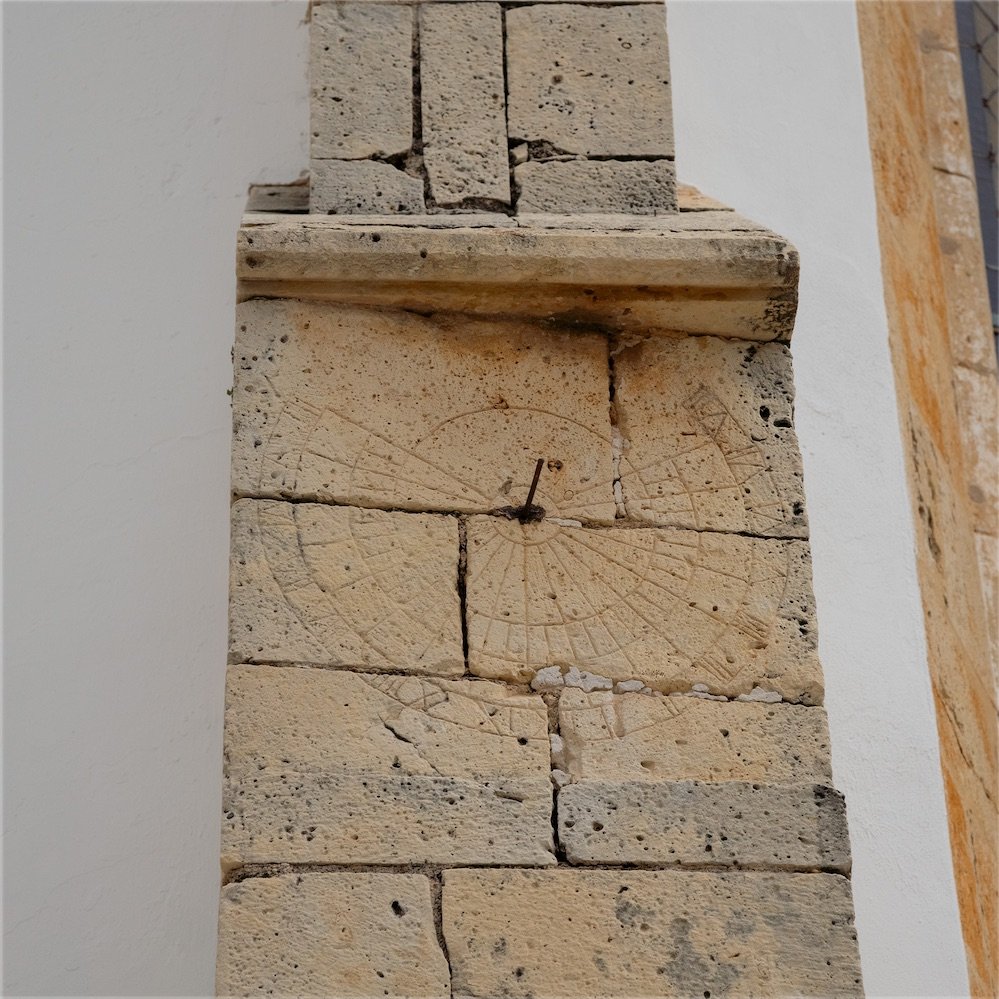
Carved into the stonework of the Gothic chapel, this is one of the oldest methods of measuring time, used by the clergy to mark the canonical hours.
The Brotherhood of the Black Community
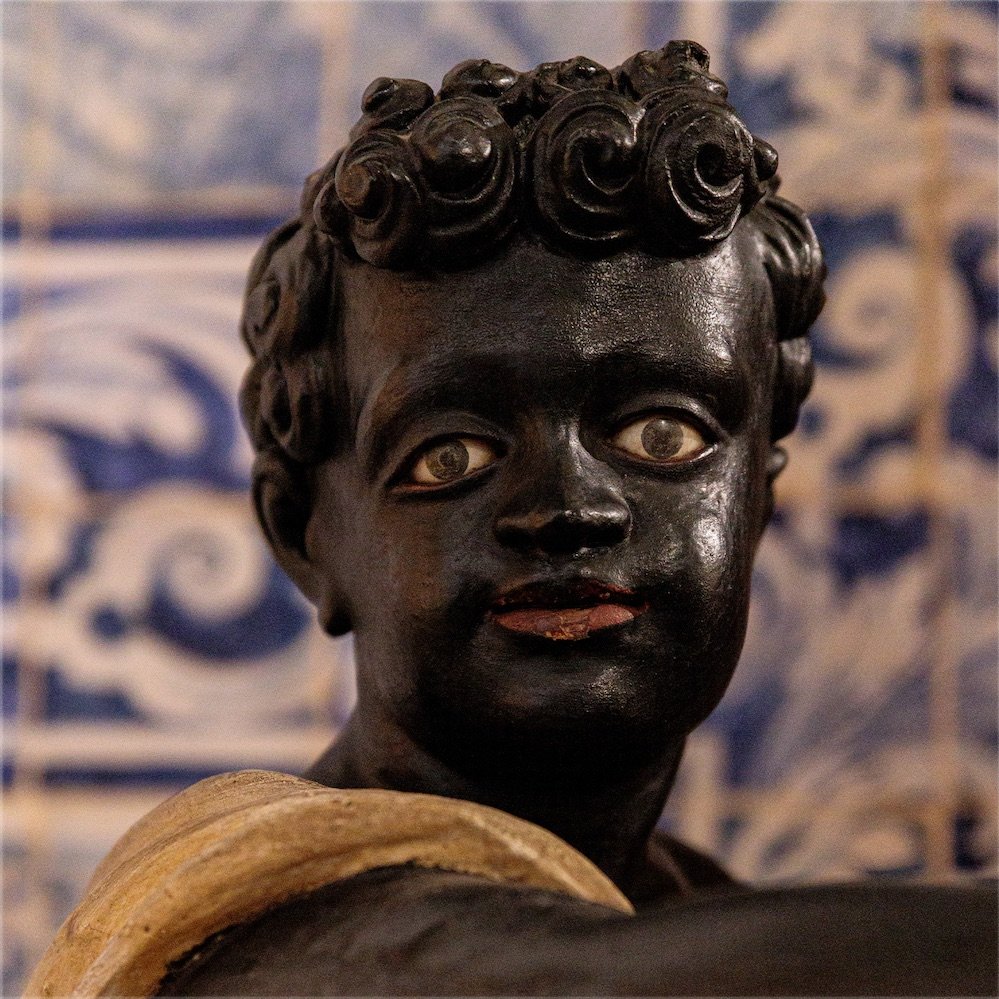
The Chapel of Our Lady of the Rosary was the seat of the Brotherhood of Our Lady of the Rosary of the Black People (Confraria dos Pretos). Founded in the 16th century, it served as a gathering point for the significant African population resident in Faro at the time.
The Empty Tomb
Bishop Dom António Pereira da Silva commissioned a magnificent tomb in the Chapel of the Relics, but he passed away before the work was completed, and his body was never transferred there.