Faro Cathedral is more than just a historical monument: it is a living space of worship and culture, the seat of the Bishop of the Algarve, and the heart of the diocese’s religious life. Its tower offers one of the finest views over the old town and the Ria Formosa, weaving together history, art, and spirituality in a place that is unique to the Algarve.
The Chapels
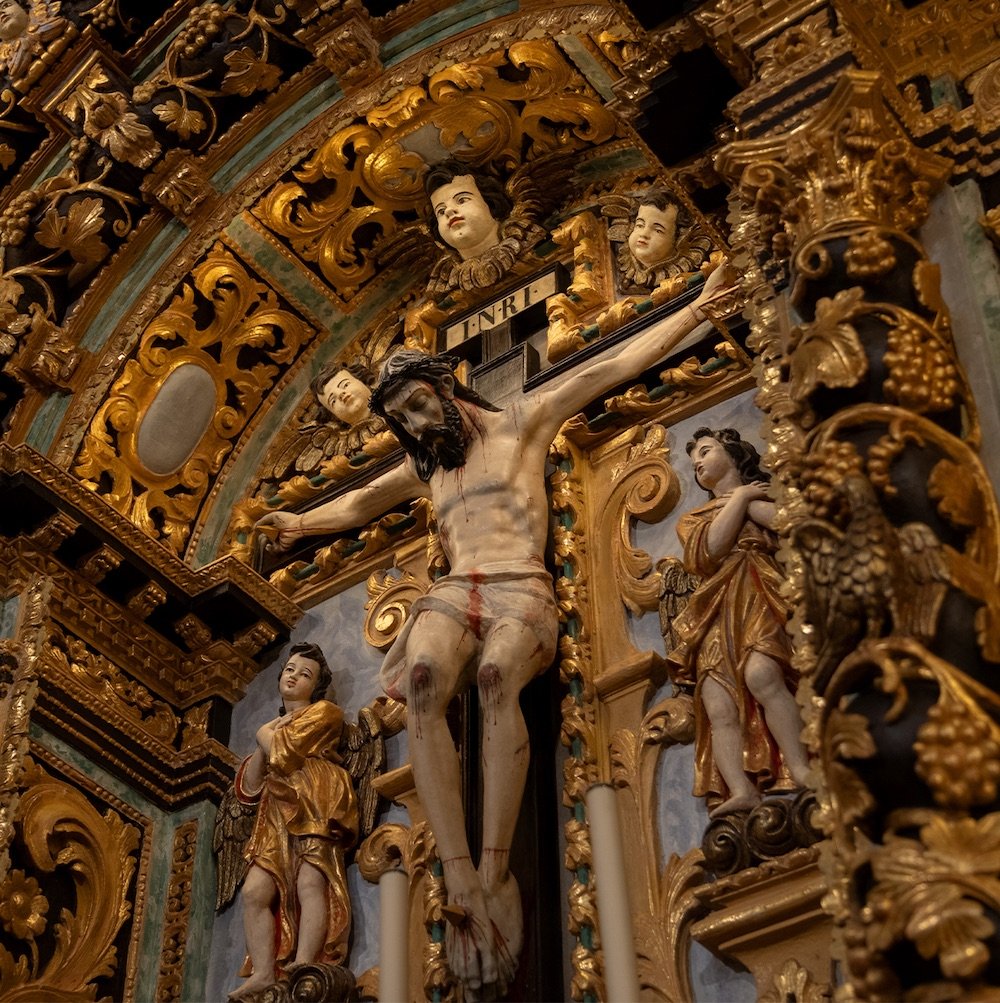
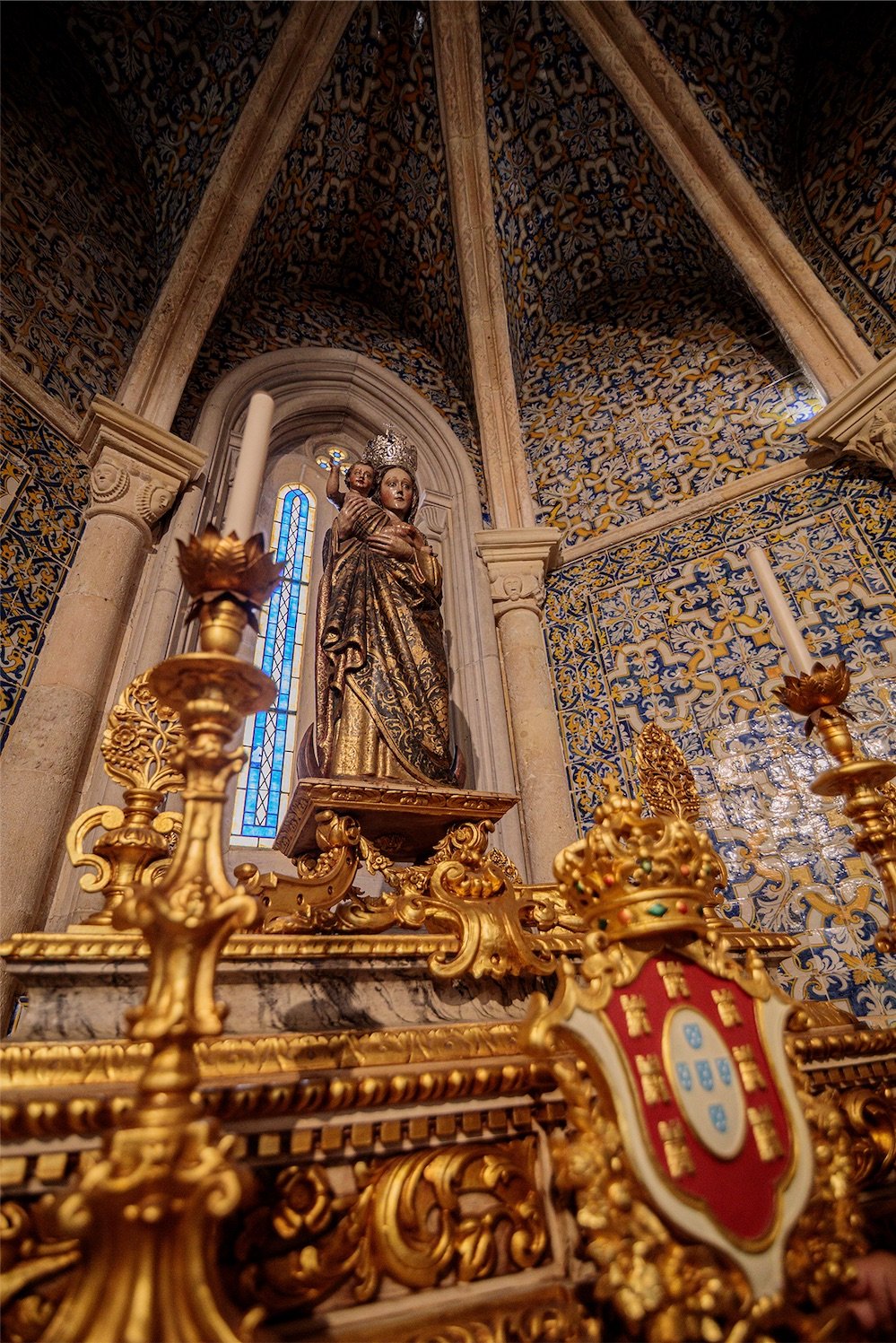
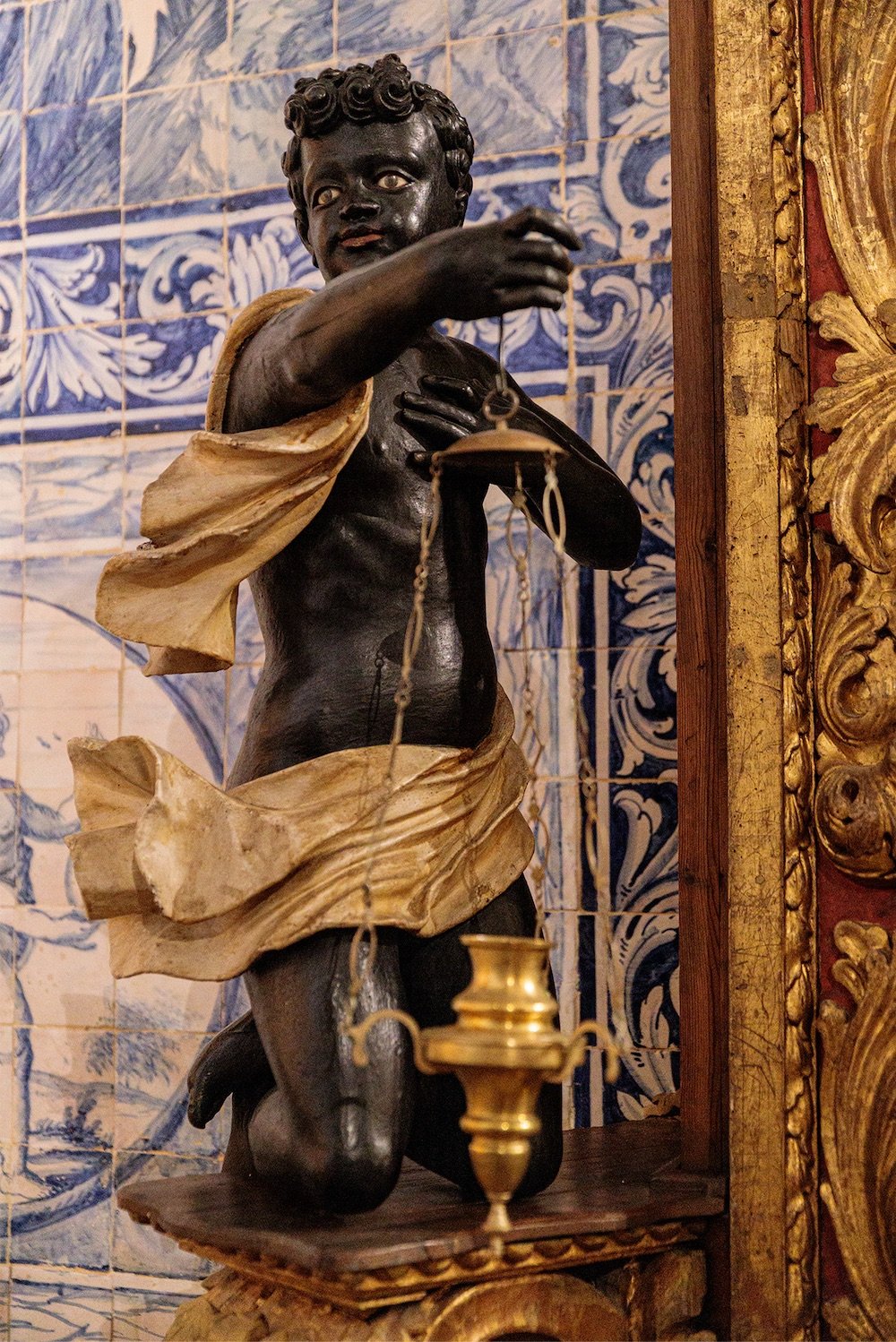
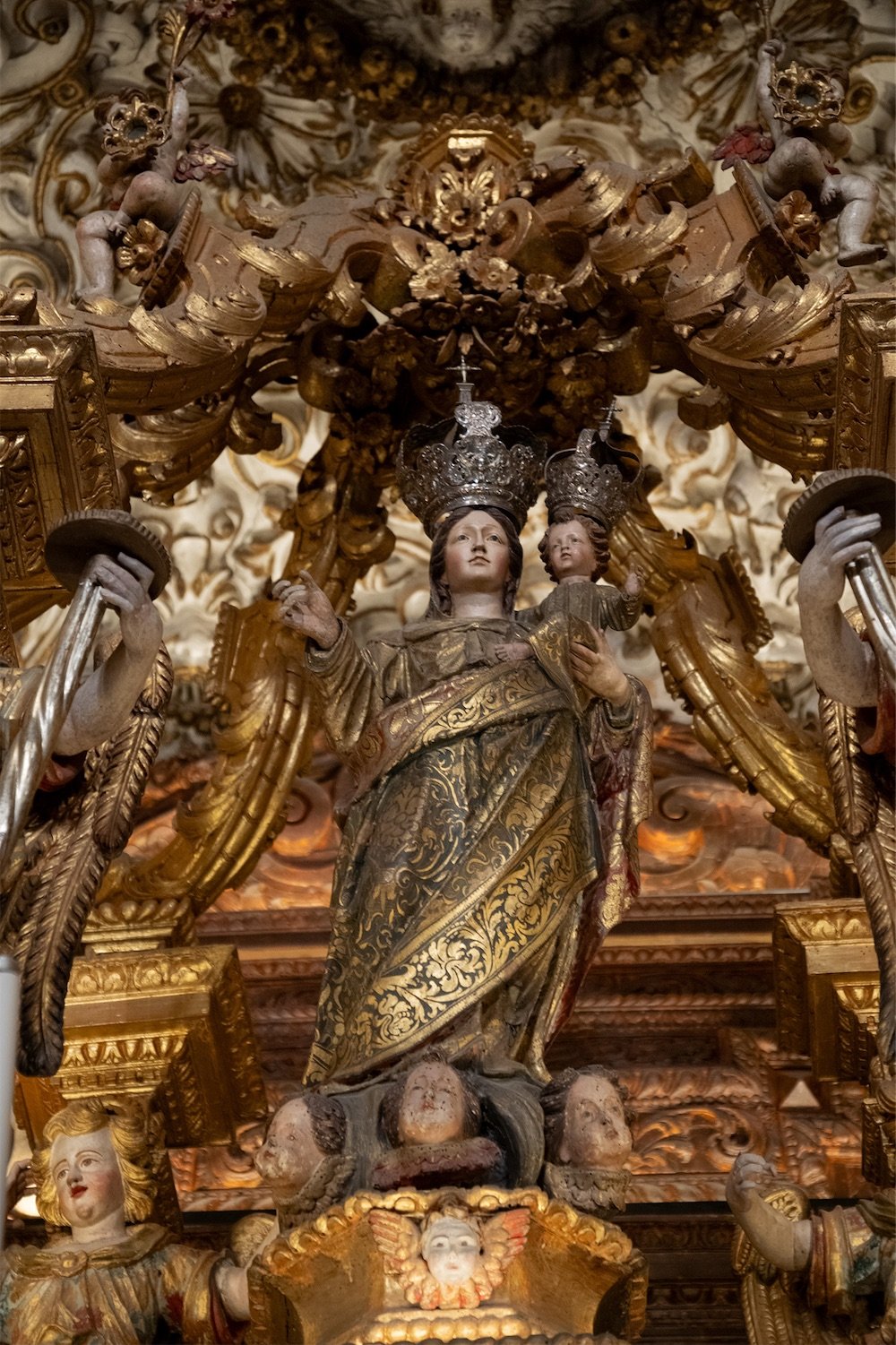
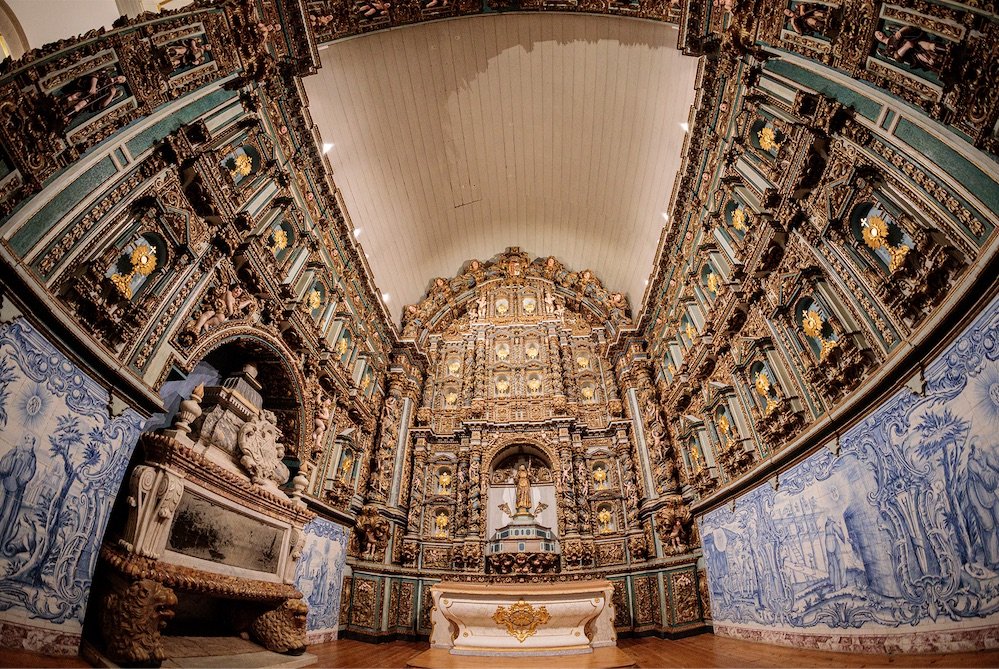
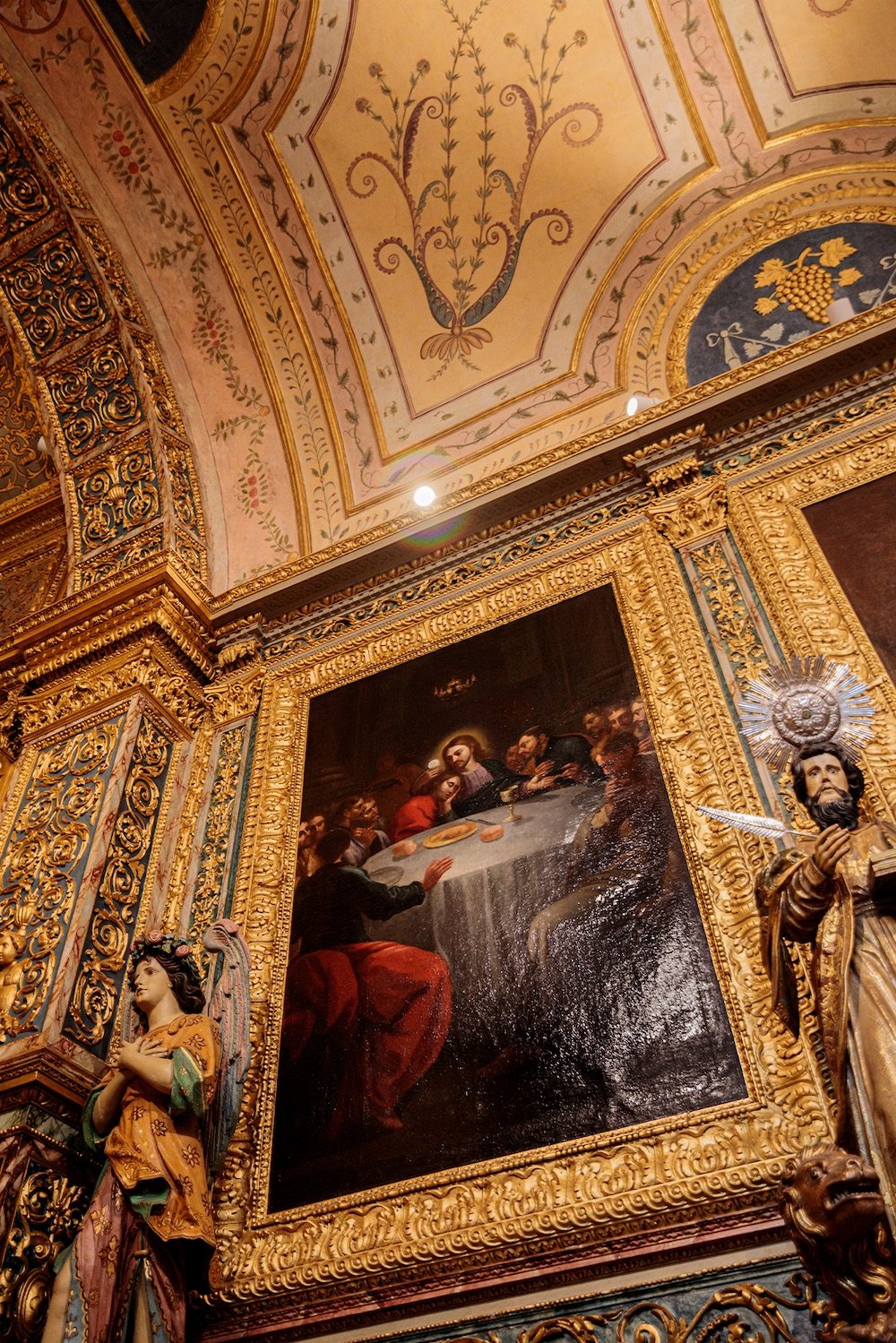
Faro Cathedral houses an extraordinary collection of Baroque and Gothic chapels, each with its own unique history and artistic treasures. Throughout the 17th and 18th centuries, bishops and brotherhoods enriched this sacred space with gilded woodcarving altarpieces, polychrome tiles, and religious statuary of rare beauty.
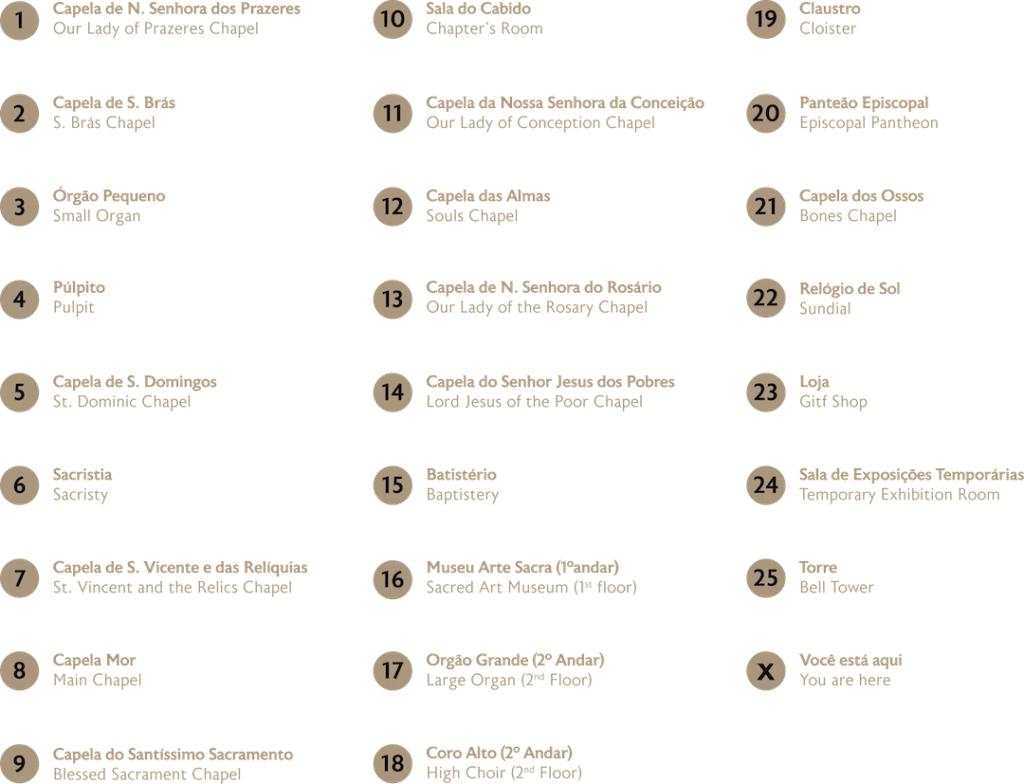
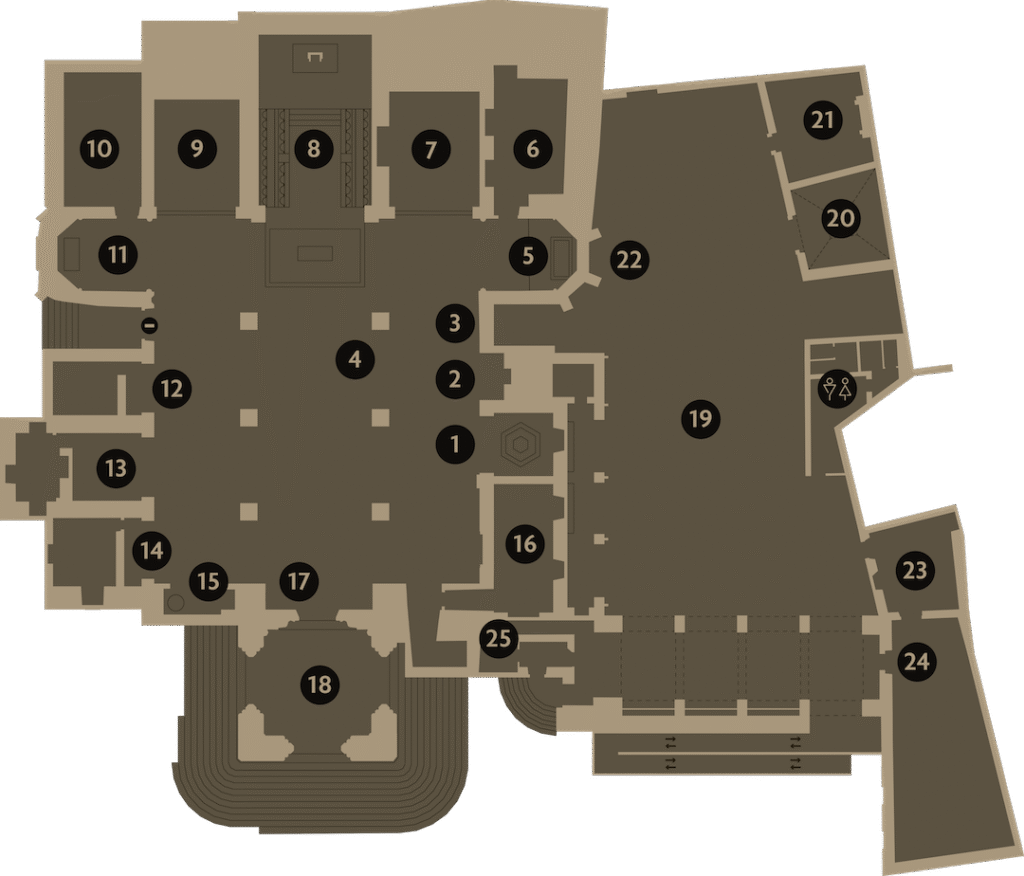
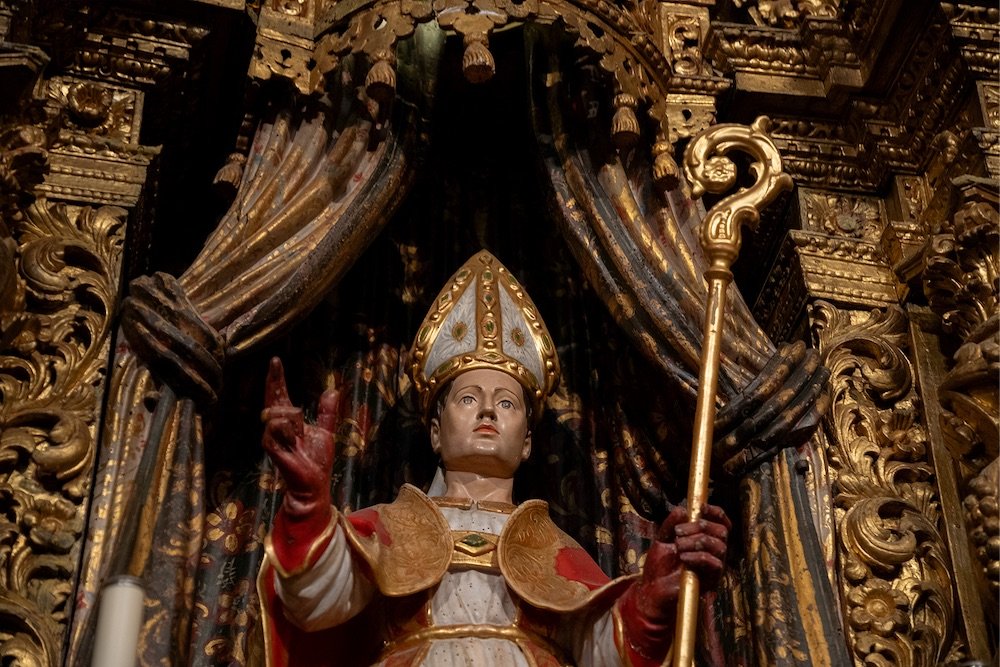
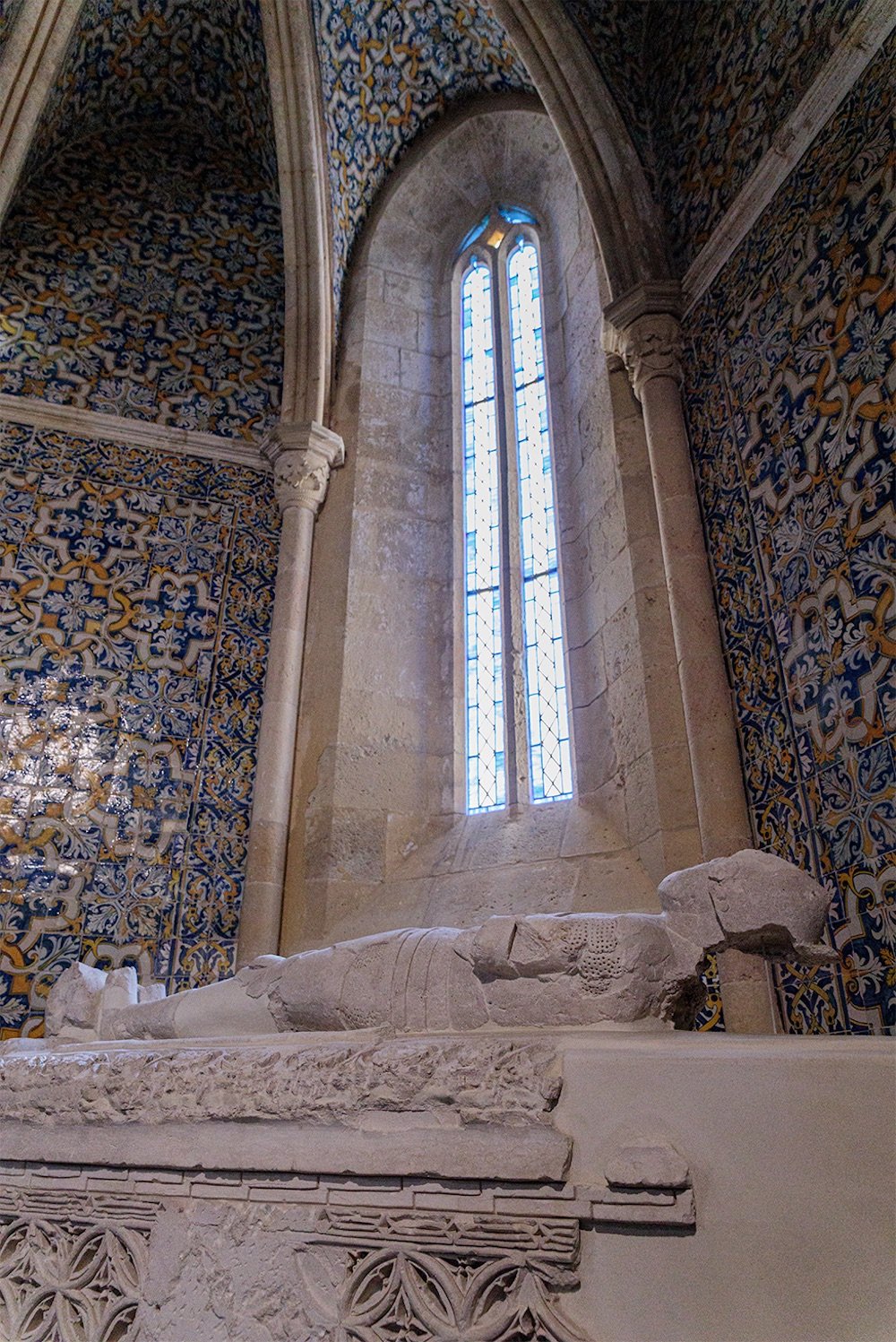
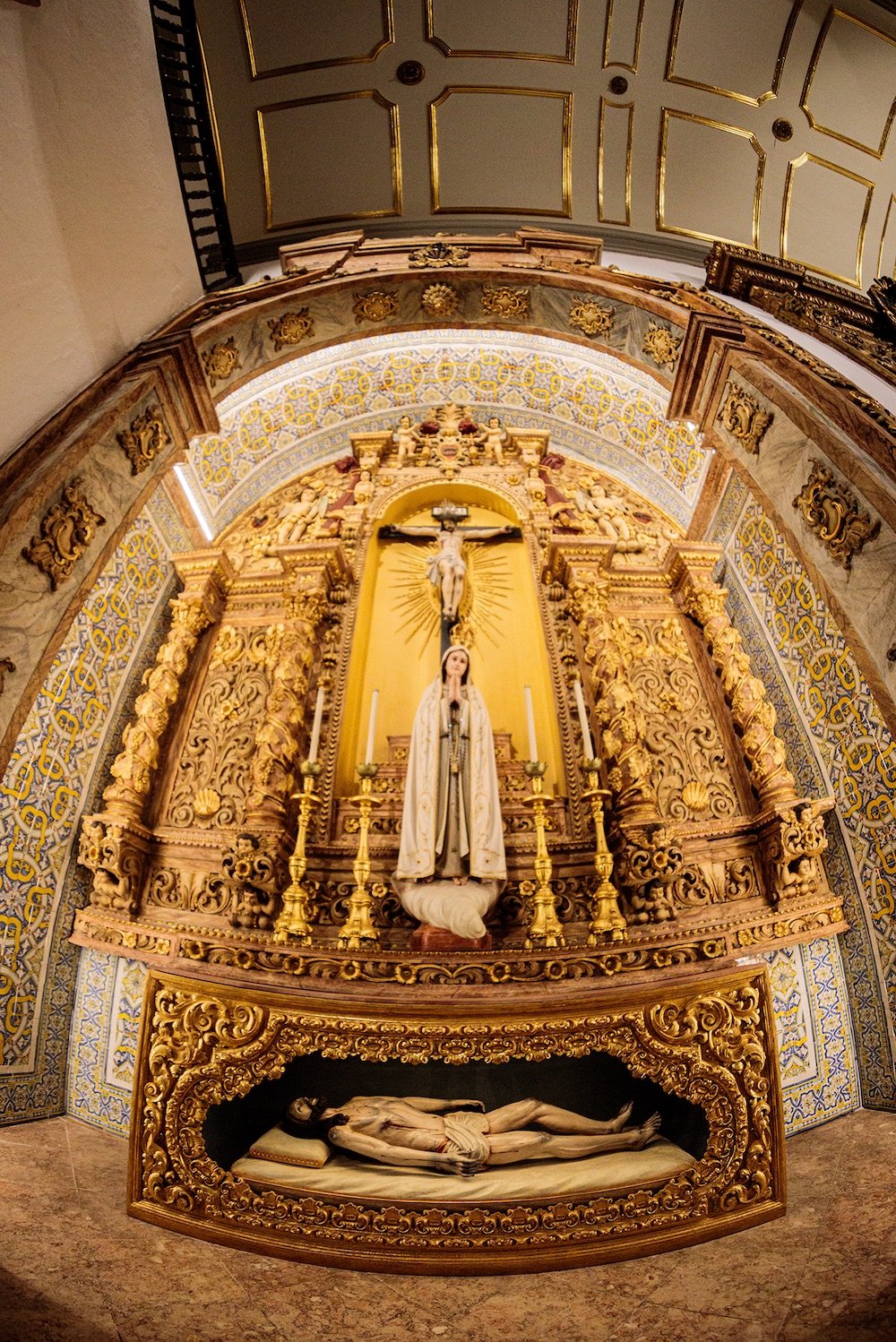
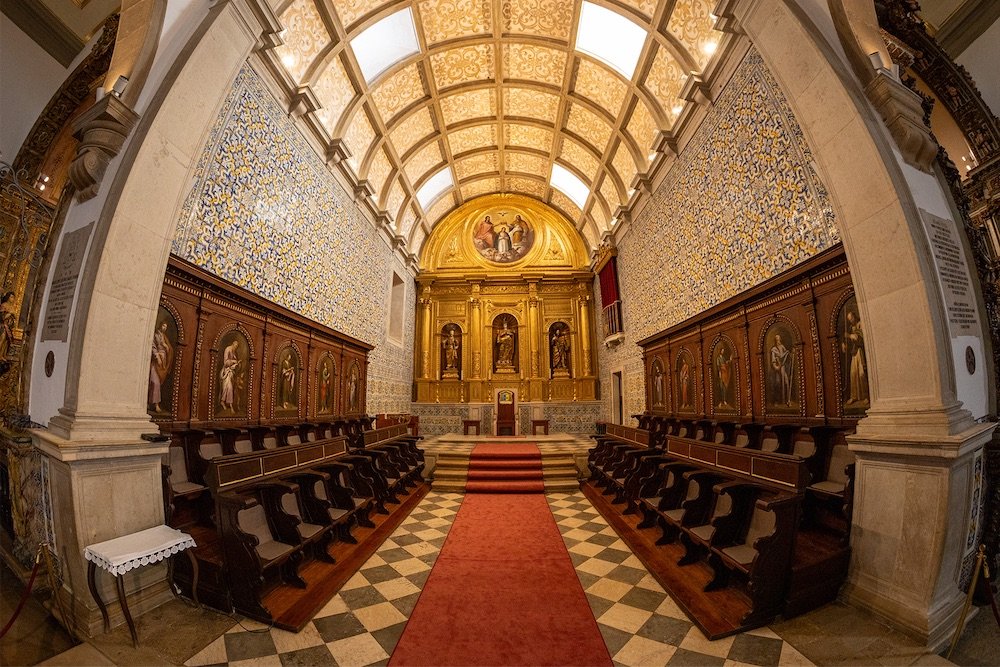
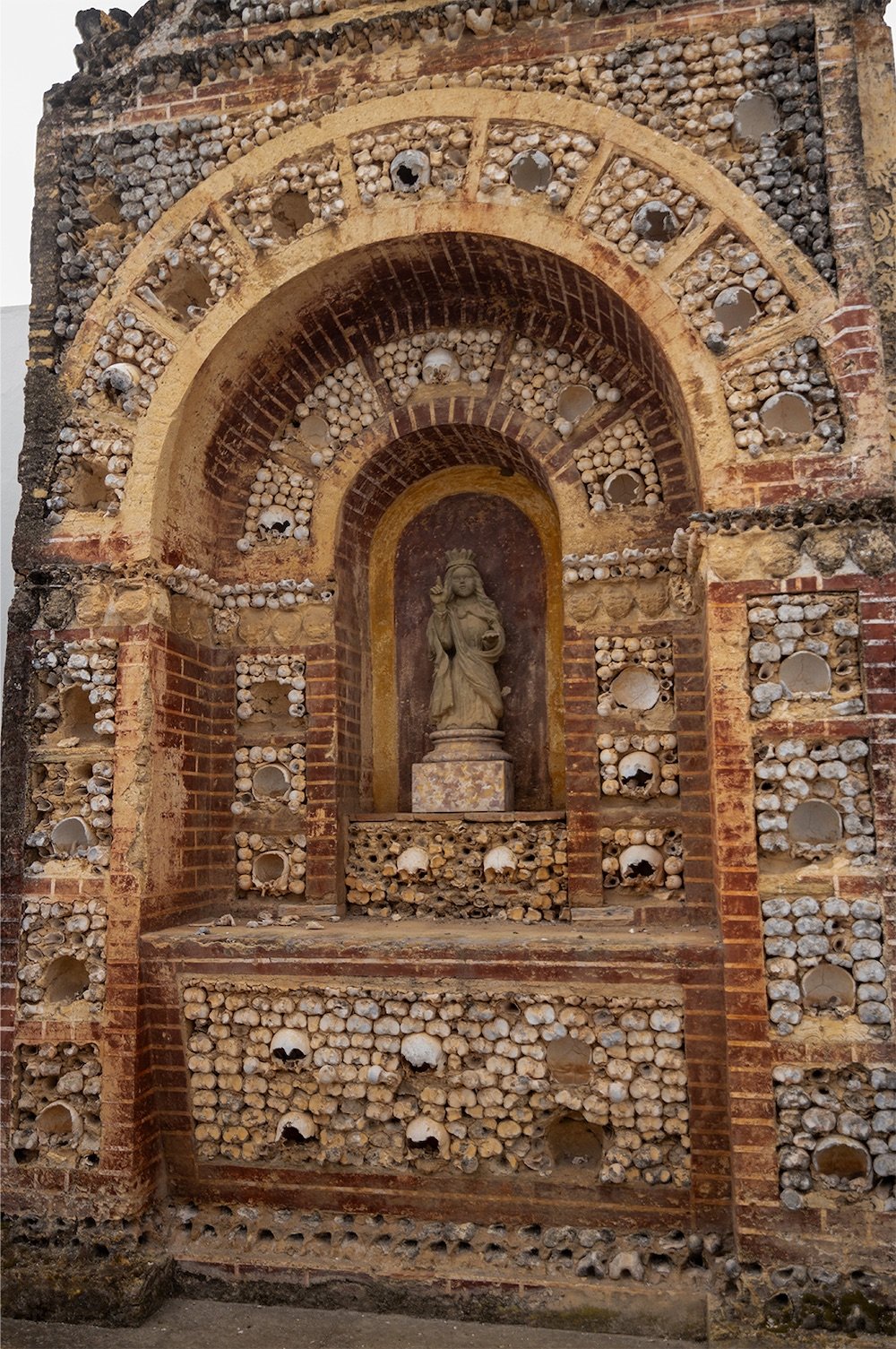
Chancel (Our Lady of the Assumption) – 17th-century Proto-Baroque, featuring the Cathedral’s patron saint. Chapel of the Blessed Sacrament – The only Eucharistic altarpiece in the Algarve (1673). Chapel of Saint Vincent and the Relics – The only reliquary-altarpiece in the region. Chapel of Our Lady of the Rosary – A testament to the Brotherhood of the Black Community (1685–1703). Chapel of Our Lady of Pleasures (Nossa Senhora dos Prazeres) – A masterpiece of Algarvean woodcarving (18th century). Chapel of Our Lord Jesus of the Poor – Featuring a statue of Our Lady of Fátima by José Thedim. Chapel of Saint Blaise (São Brás) – An impressive Baroque triumphal arch (1750). Chapel of the Souls – A space for reflection on death and equality (1722). Chapel of Our Lady of the Conception – Gothic architecture from the 14th–15th centuries. Chapel of Saint Dominic – A Gothic chapel containing the medieval tomb of Rui Valente. Chapel of Bones – 17th-century funerary art. Episcopal Pantheon (Chapel of Saint Michael) – The final resting place of the Bishops of the Algarve.
Cathedral Museum
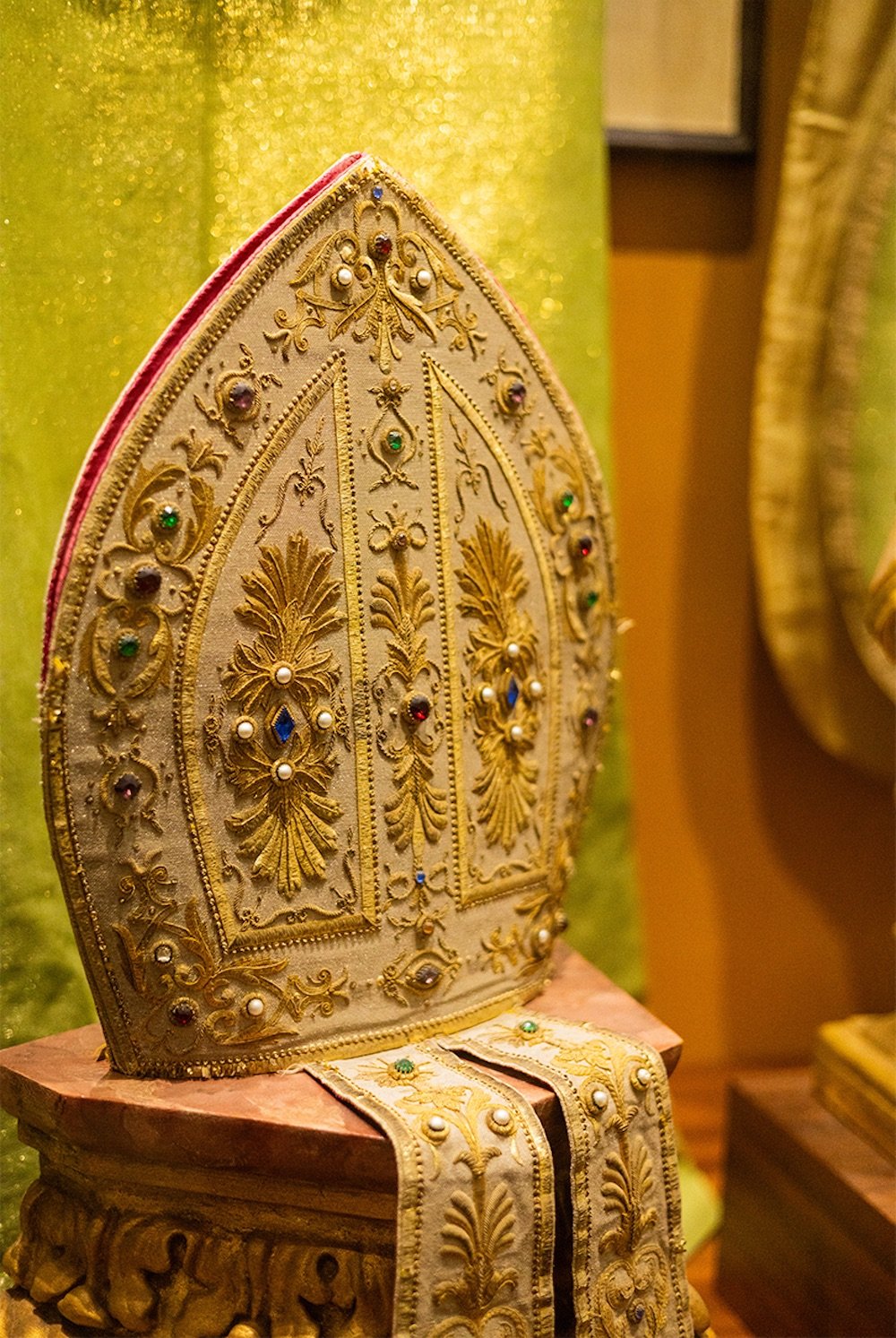
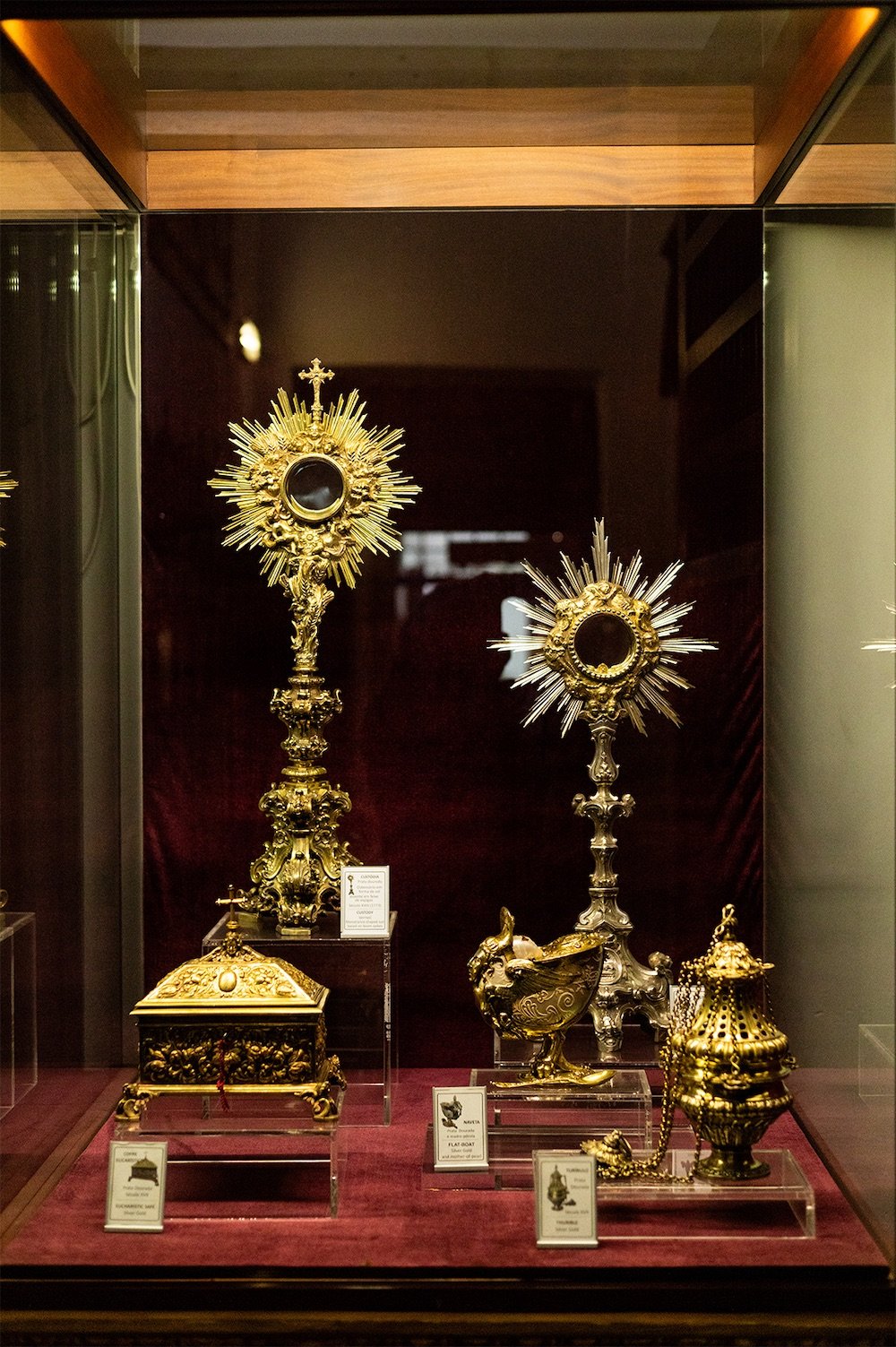
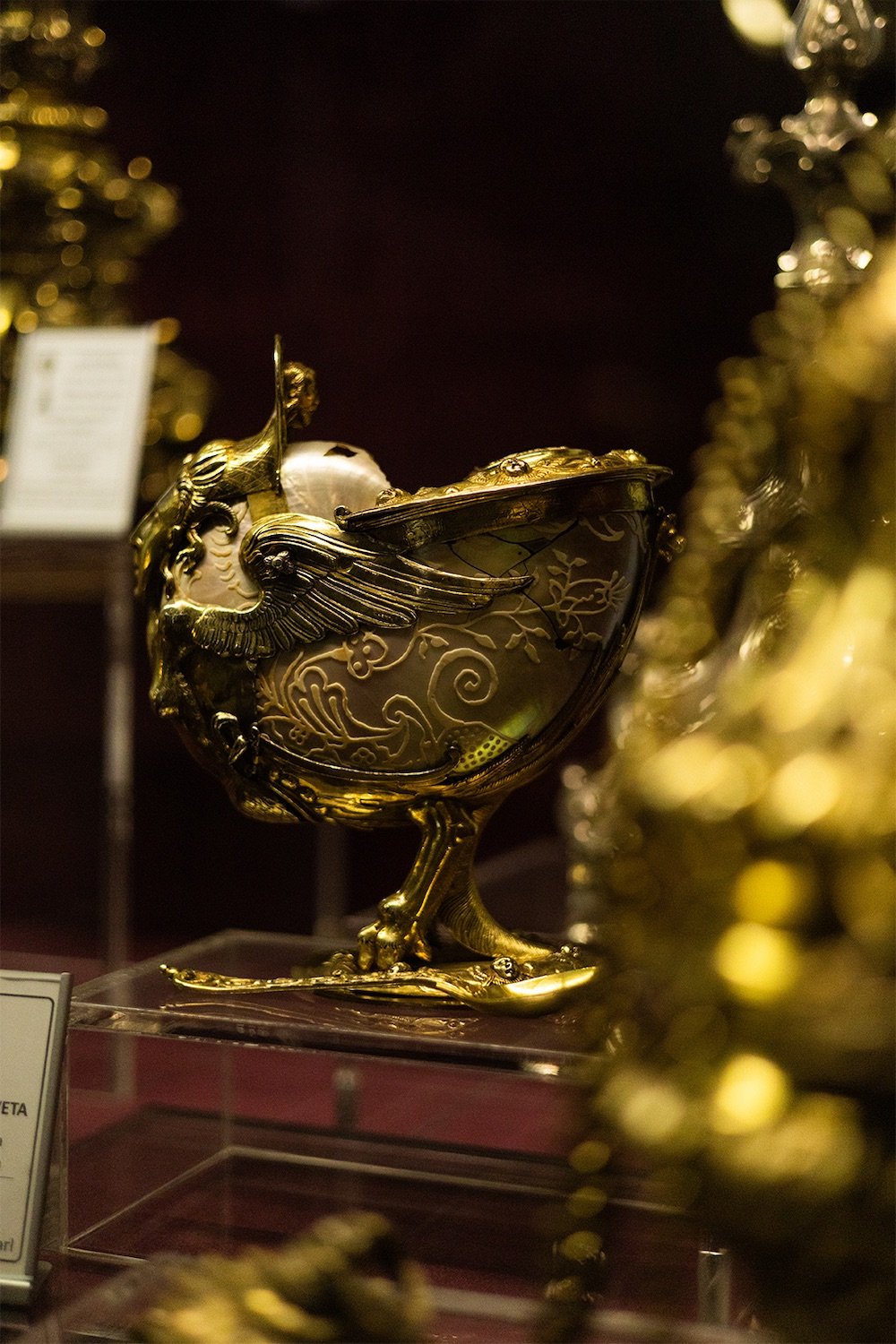
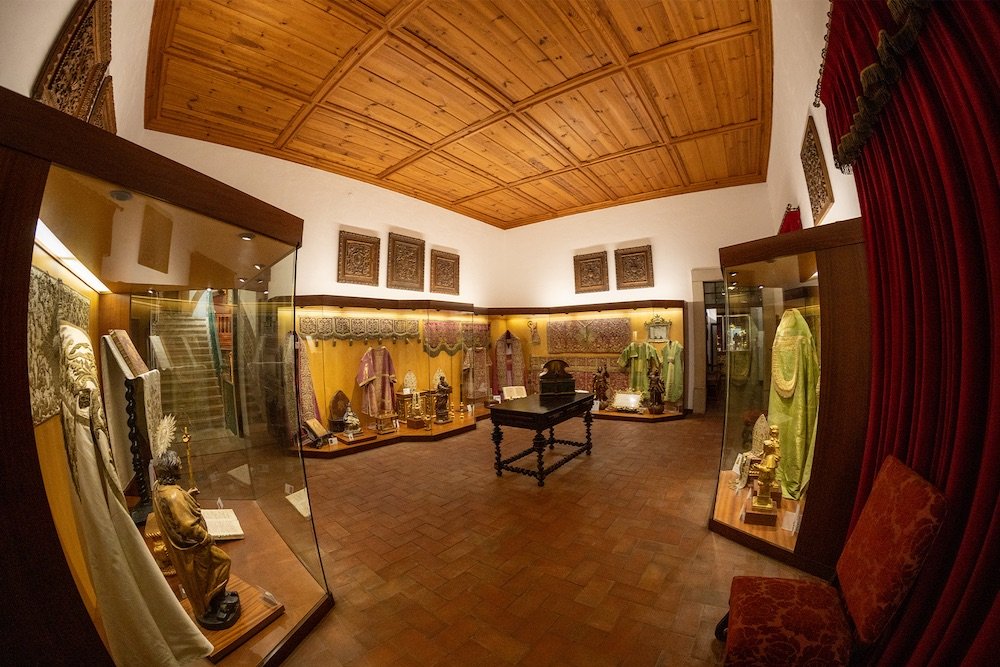
The Cathedral Museum houses a valuable collection of sacred art spanning the centuries, from medieval pieces to Baroque liturgical objects. Located within the Cathedral, this museum space offers a journey through the religious and artistic history of the Algarve.
The Museum is included in the single visit ticket, providing a complete experience of the cathedral’s heritage.
The Cathedral Organs
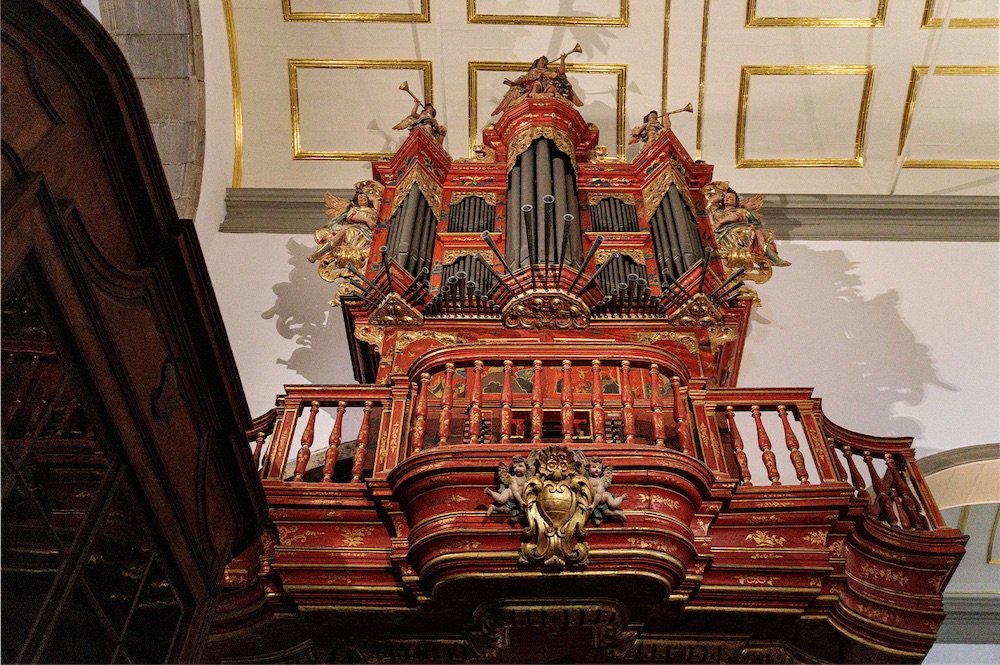
The Grand Organ (1715–1716)
A monumental instrument of North German design, commissioned from the master organ-builder João Henriques Hullenkampf. It is noted for its exuberant Chinoiserie decoration created by the Algarve artist Francisco Correia da Silva.
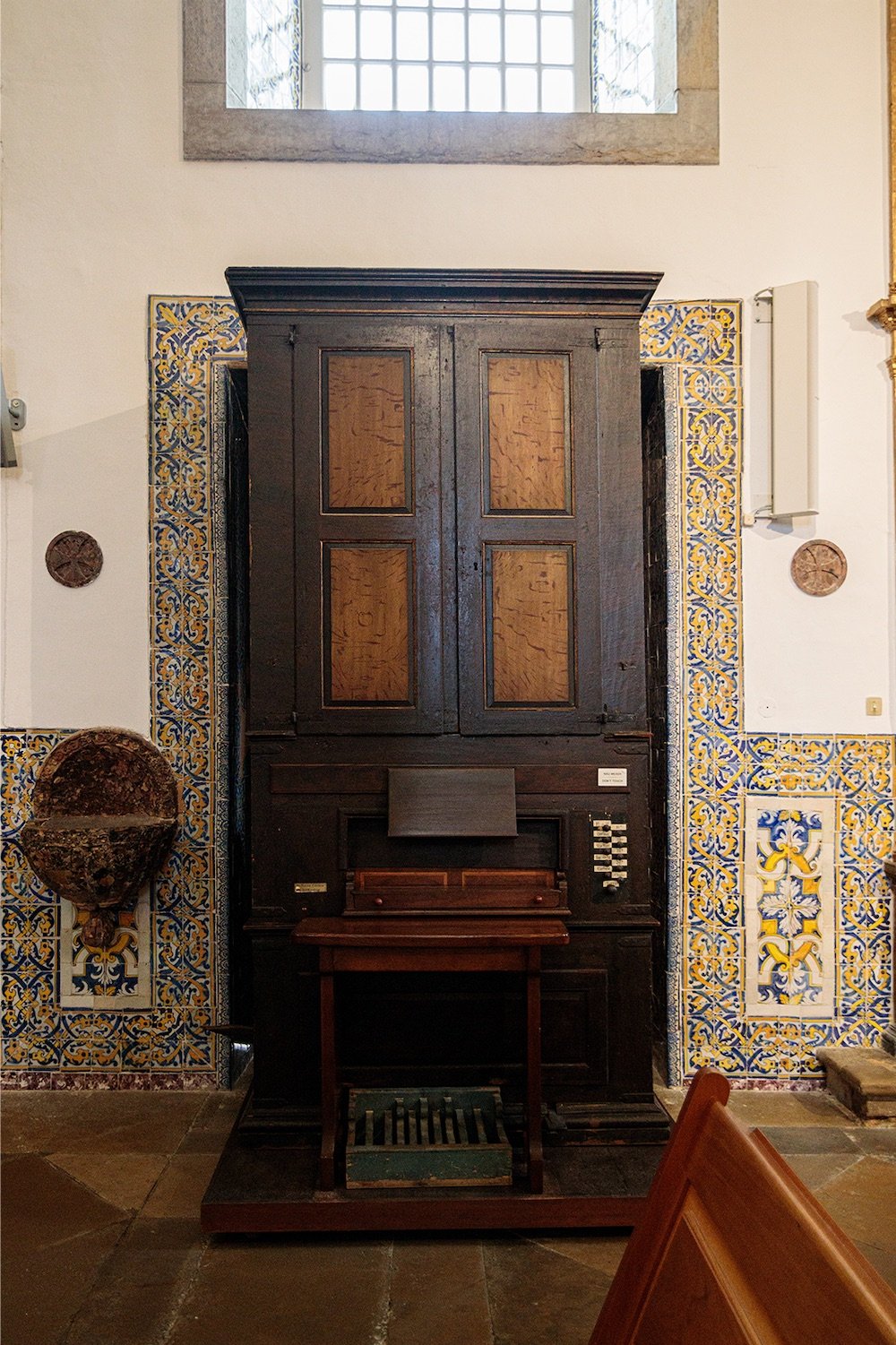
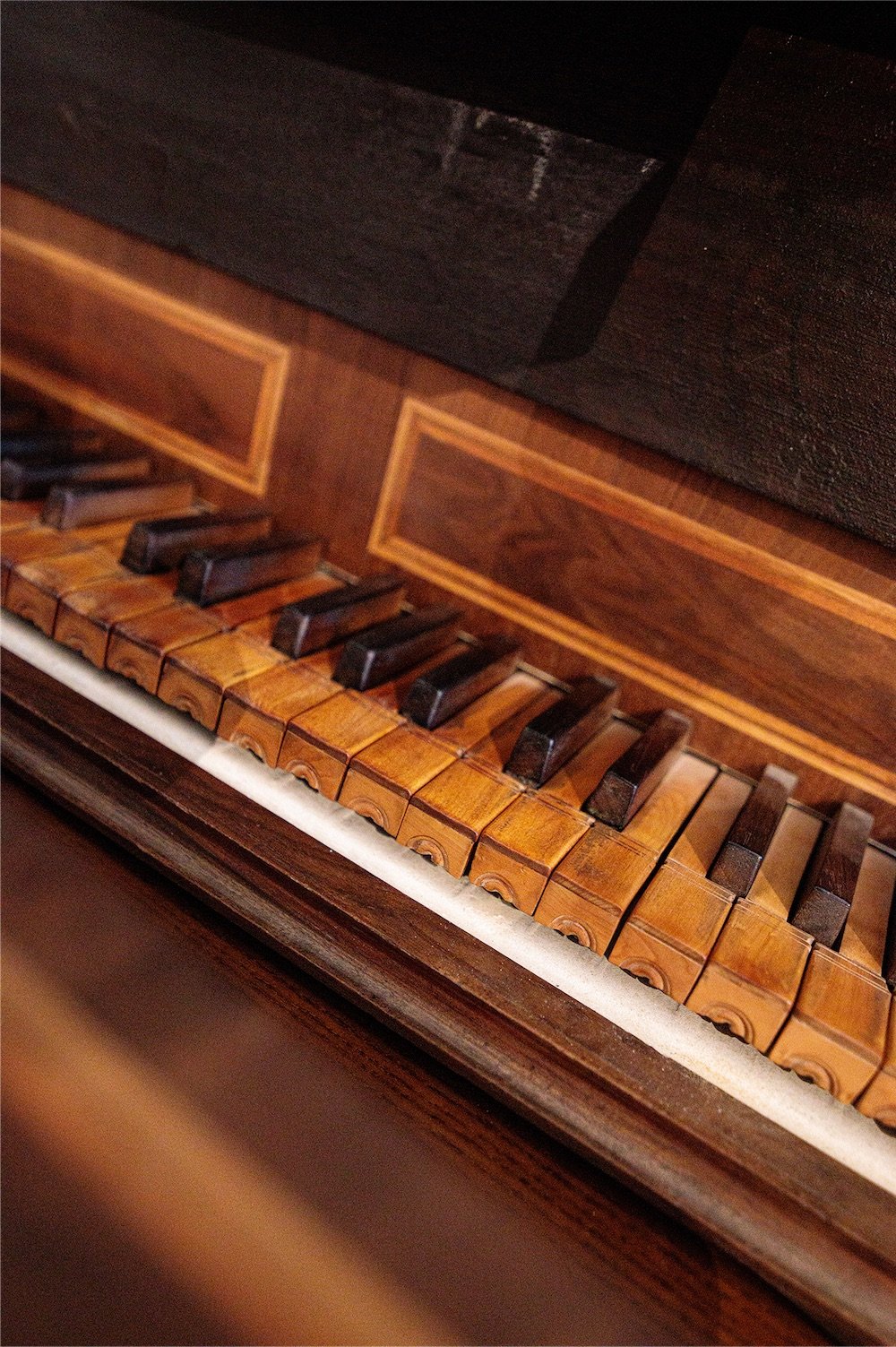
The Small Organ (1634)
The older of the two instruments, dating from 1634, it preserves a tradition of nearly four centuries of sacred music at Faro Cathedral. It is still used regularly for parish liturgy.
Notable Spaces
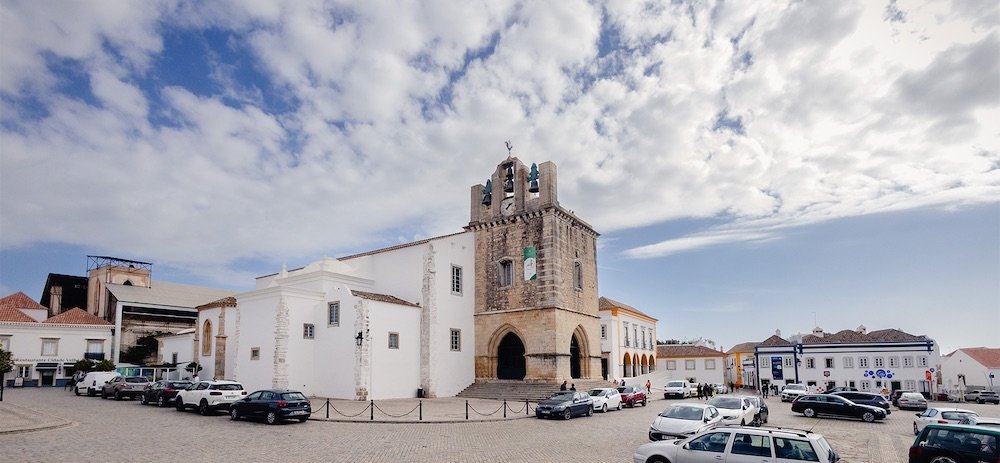
Bell Tower (13th–15th Century)
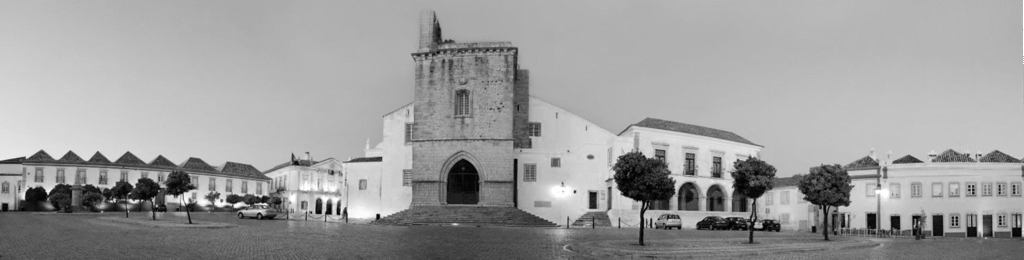
This robust medieval tower is one of the original elements of the Cathedral that survived both attacks and earthquakes. It offers one of the city’s finest viewpoints, with panoramic vistas over Faro’s historic centre and the Ria Formosa.
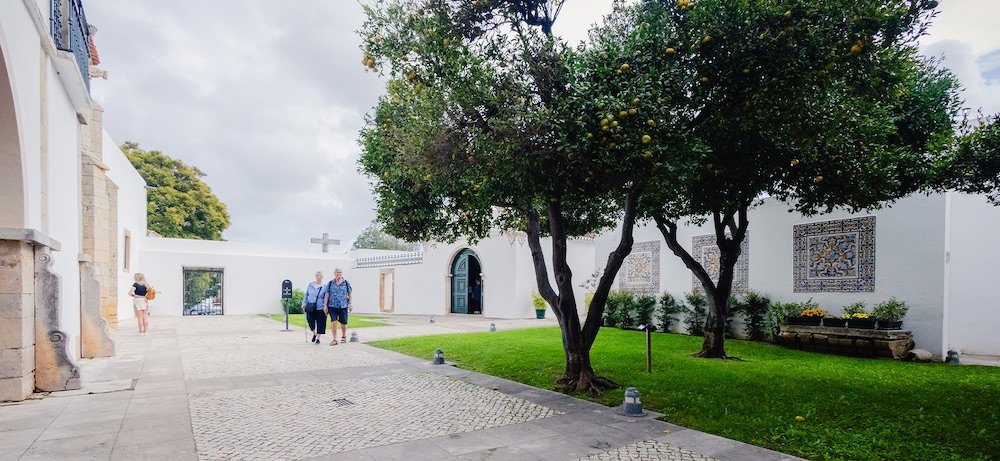
The Cloister
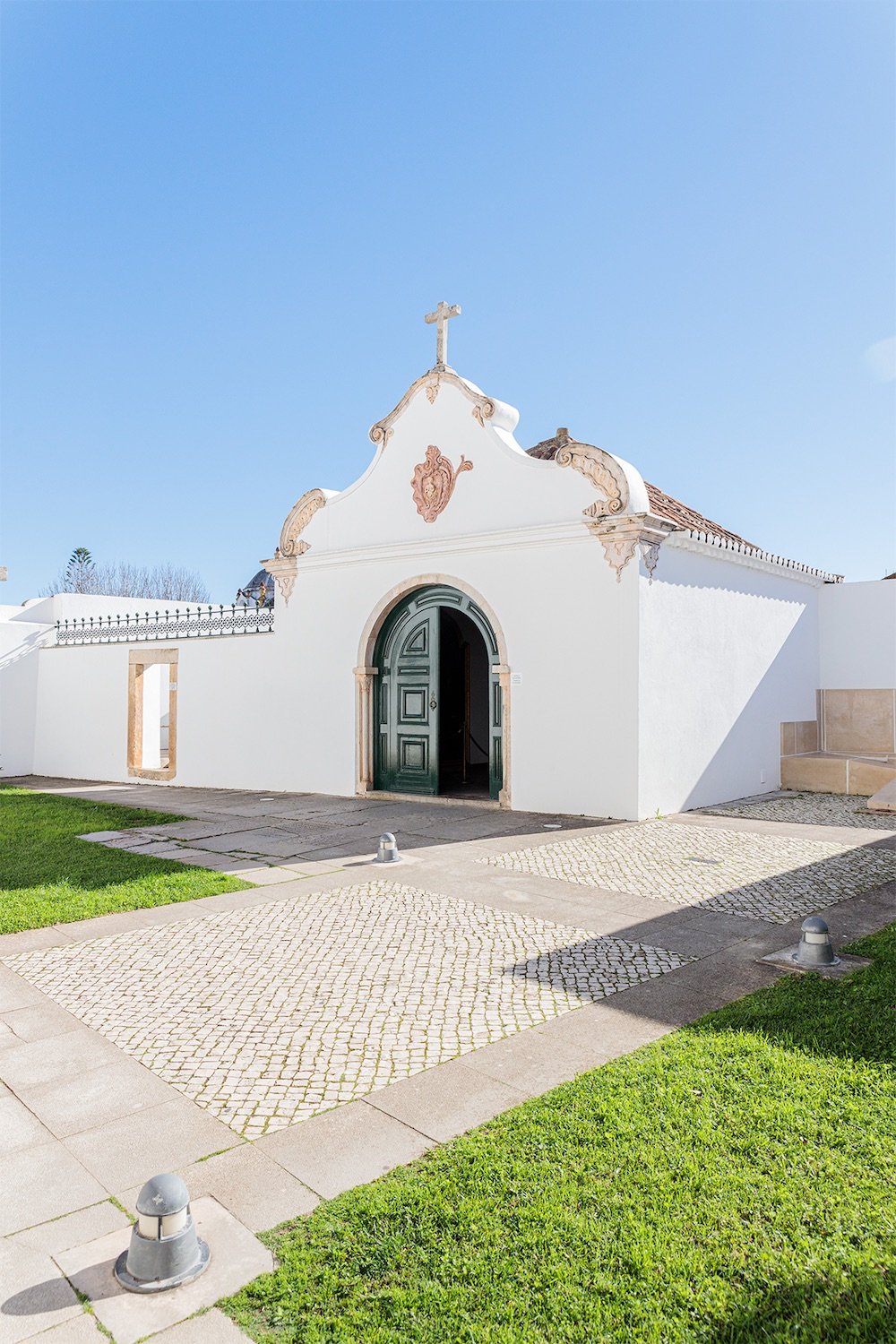
A conventual space that houses the Chapel of Bones, the sundial, and the Episcopal Pantheon.
Notable Spaces
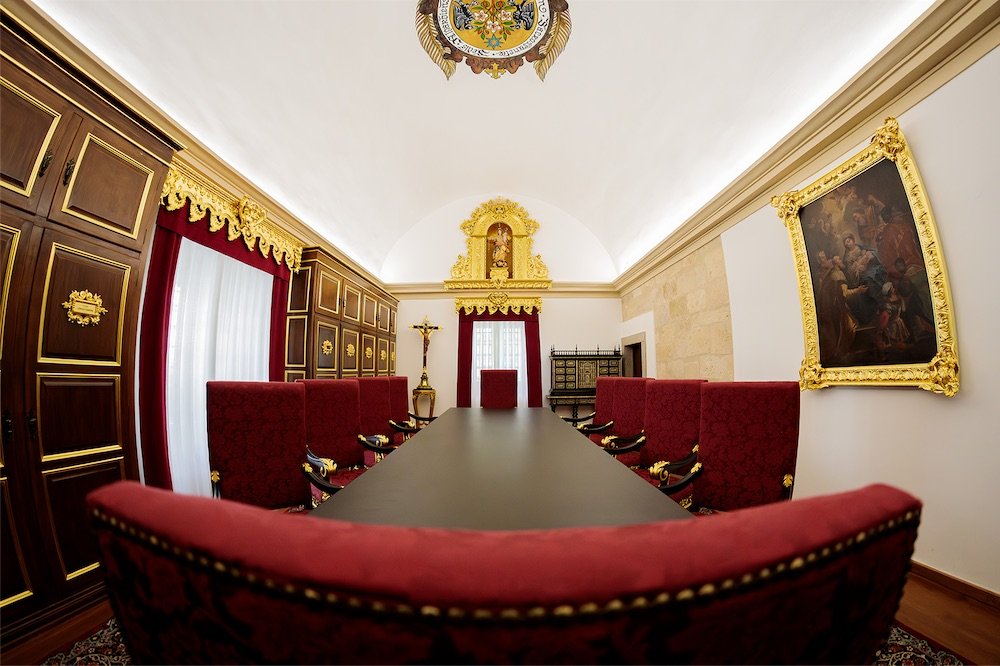
The Chapter Room
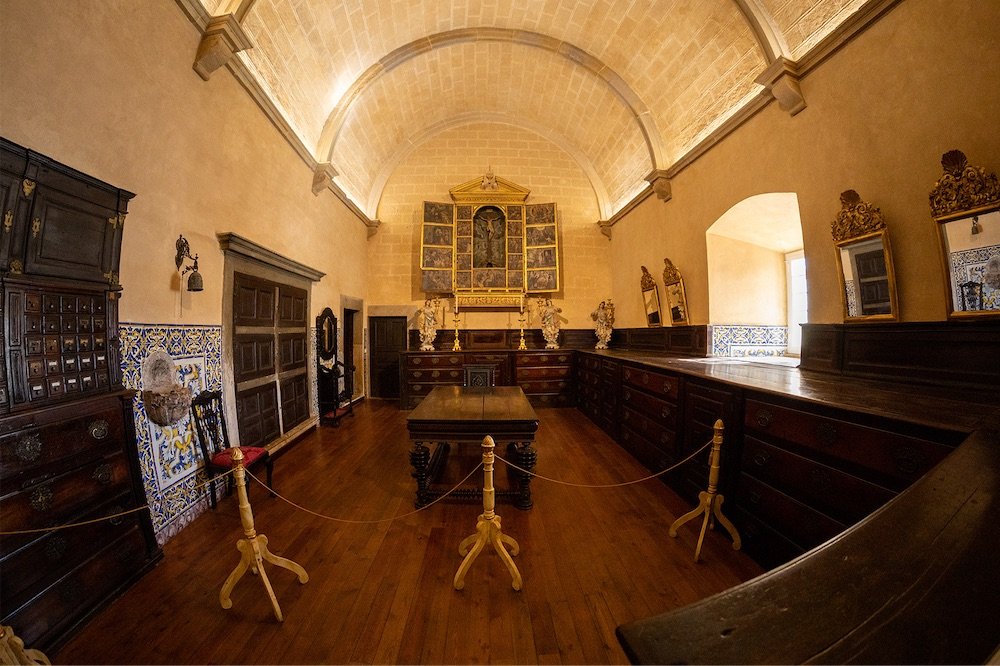
The meeting place of the canons, featuring 18th and 19th-century furniture, a statue of Our Lady of the Rosary, and a canvas of the “Adoration of the Magi”. The Chapter’s coat of arms is displayed on the ceiling.
The Sacristy (17th Century)
Featuring a full vault underlined by four stone arches with sgraffito work. It contains rosewood (pau-santo) cabinets, a triptych depicting scenes from the Passion of Christ, and a high-relief of the Assumption of Our Lady.
The Baptistery (17th Century)
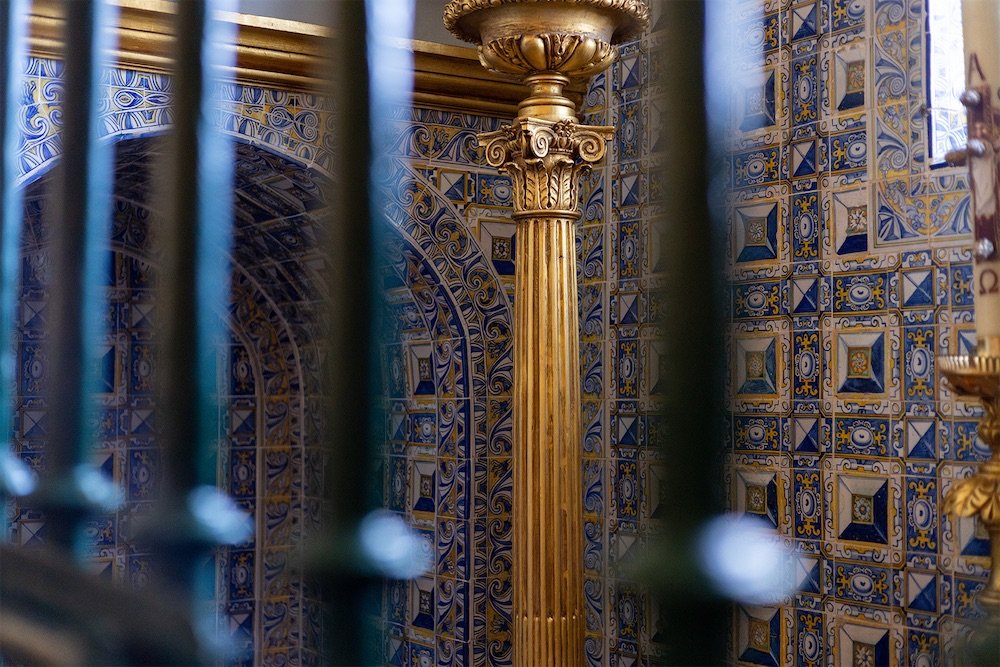
Located at the entrance, symbolising that baptism is the gateway to Christian life. It features a 17th-century baptismal font and “diamond-point” tiles, with a stucco representation of the Holy Spirit on the vault.
Architecture and History
Faro Cathedral stands upon layers of history dating back to the earliest centuries of Christianity. Built following the Christian reconquest of 1249, the temple occupies the site of a Paleo-Christian basilica which, during the Islamic period, was converted into a mosque.
Of the original medieval building, the robust bell tower, the Gothic transept chapels, and the pointed arch portal remain. Following the English sack of 1596, extensive reconstruction work began, introducing Doric columns and Renaissance elements. The 17th and 18th centuries brought the richness of Baroque gilded woodcarvings, which today form one of the most valuable ensembles of that era in the Algarve.
The Cathedral now features three aisles separated by Doric columns, a chancel with gilded coffered ceilings, a 17th-century sacristy with sgraffito work, a baptistery at the entrance, and a cloister providing access to the Cathedral Museum. The bell tower offers one of the city’s finest viewpoints, with vistas over the historic quarter and the Ria Formosa.